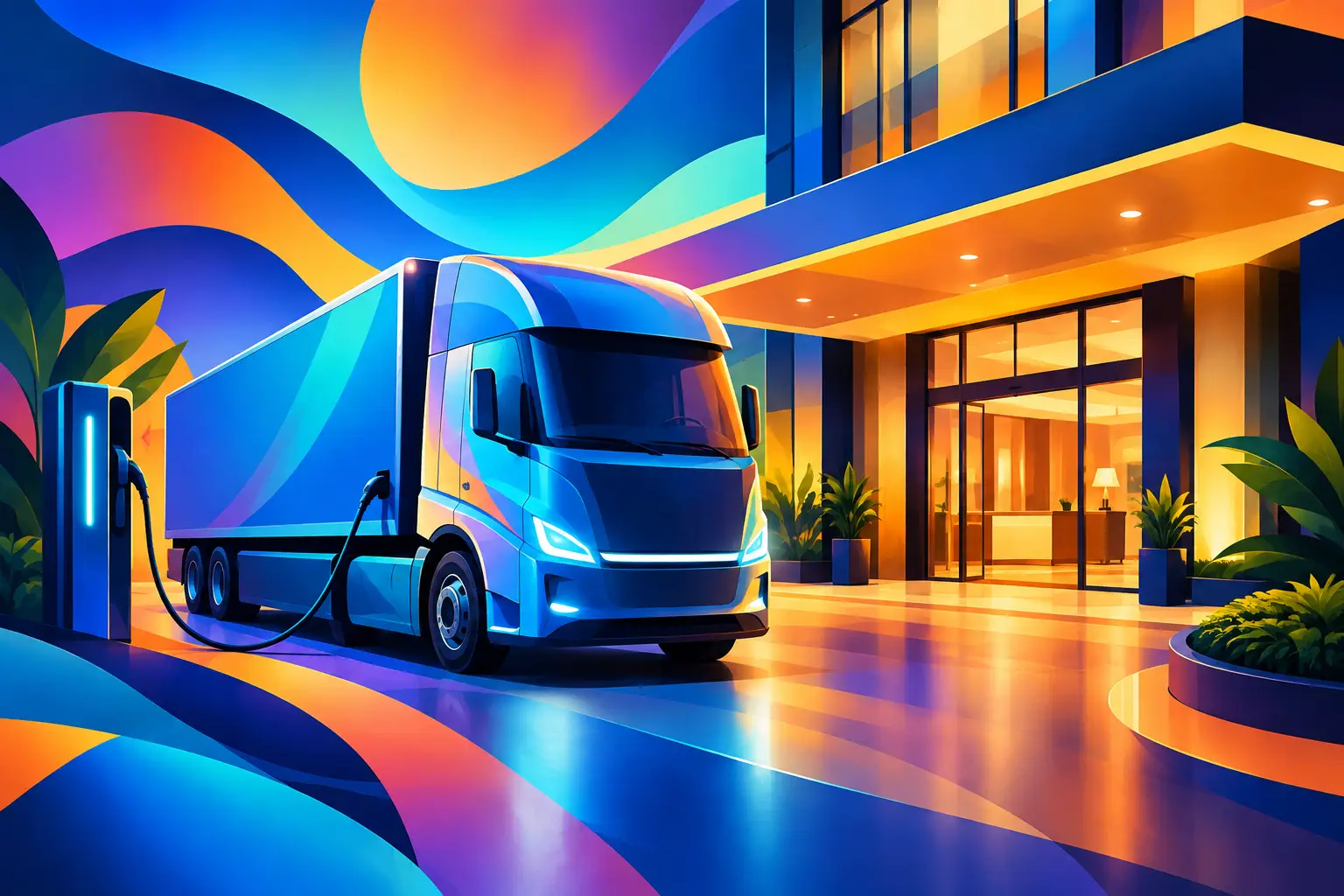
A hotel driveway is not just another stop on a route. It is the first five minutes of a guest’s stay, the backdrop for a wedding arrival, and a tightly managed space where valet, security, events, and guest experience all overlap. So, can battery trucks enter hotels? Often, yes - but access depends on the property’s operating rules, vehicle clearance, timing, and the way the activation is planned.
For advertisers and event teams, the key difference is noise. A battery-electric LED truck can arrive, display, and depart without the generator hum associated with conventional mobile billboards. That makes it a more practical fit for hotel motor courts, convention drop-offs, poolside events, and nighttime activations where a diesel-powered vehicle may be rejected before the conversation even starts.
Can Battery Trucks Enter Hotels in South Florida?
Battery trucks can enter many hotels when the property approves the plan and the vehicle can safely operate in the designated area. Electric operation does not create automatic access. Hotel management still controls its private driveways, loading zones, porte cocheres, parking areas, and event spaces.
What an electric platform changes is the conversation. Instead of asking a hotel to accept engine noise, generator vibration, fuel odors, and a loud roadside-style presence, the event producer can propose a quiet, premium display unit designed for a hospitality environment. That distinction matters at a Brickell luxury property during lunch service, an oceanfront resort hosting a brand dinner, or a Fort Lauderdale hotel trying to keep a wedding reception undisturbed.
The best approach is simple: obtain property approval early, provide vehicle specifications, identify the exact placement or movement pattern, and schedule around the hotel’s busiest operational windows. A good plan respects the guest experience before it asks for attention.
Why Hotels Are More Open to Quiet Electric Trucks
Hotels are built around controlled atmosphere. Guests expect calm in the lobby, easy arrivals at the valet stand, and clean sightlines at the entrance. Event planners expect their activation to look intentional, not improvised. A generator-free electric LED truck addresses several of the objections that commonly limit mobile advertising on hotel grounds.
First, there is sound. Traditional mobile billboard trucks may need a generator running to power LED screens. Even when the vehicle is stationary, that background noise can compete with outdoor dining, a pool deck, a conference registration area, or a cocktail reception. A battery-electric truck removes that specific issue.
Second, there is presentation. A high-brightness 4K LED display can carry polished creative, motion graphics, event schedules, sponsor loops, live feeds, or multilingual messages without bringing the visual clutter of temporary banners and pop-up signage. For a hotel hosting a product launch, it can function as a moving digital welcome board before the event and a controlled display point during peak arrival windows.
Third, there is flexibility. A permanent sign cannot reposition itself for check-in traffic at 4 p.m., convention arrivals at 8 a.m., and nightlife crowds at 10 p.m. A mobile LED truck can. The route and dwell locations can be designed around the audience rather than left to chance.
That said, quiet operation does not override safety rules. Hotels may restrict vehicle size, require certificates of insurance, prohibit idling in certain areas, limit access during valet peaks, or require an escorted arrival. These are normal venue requirements, not deal-breakers.
Where a Battery Truck Can Work Best at a Hotel
The strongest hotel activations are not always parked directly at the front door. Sometimes that placement disrupts arrivals or creates a security concern. A smarter campaign may use the outer edge of the motor court, an approved event entrance, a private parking area, a nearby legal curbside location, or a continuous route around the property’s highest-traffic approaches.
For a conference hotel, the truck can greet attendees during registration, then move to the exit route when sessions end. For a real estate team hosting a broker event, the display can run listing video, neighborhood visuals, and QR-directed calls to action near the arrival sequence. For a nightlife sponsor, it can work the hotel entrance early, then cruise the surrounding district when guests spill into nearby restaurants and lounges.
Placement also depends on the message. A wedding welcome message needs a controlled, discreet position. A product launch wants visual impact and social content opportunities. A convention sponsor may value repeat exposure on approach roads more than a single static location inside the property. The route should follow the campaign objective, not a generic truck schedule.
What Hotels Need Before Approving an Activation
Property teams make decisions quickly when they receive a clear operating plan. Vague requests such as “we want to park a billboard truck outside” create friction. A professional request answers the questions security, valet, engineering, and events teams already have.
Provide the vehicle dimensions and turning needs, the proposed arrival and departure times, the desired location, the campaign purpose, and whether the truck will remain stationary or circulate. Explain that the unit is battery-electric and generator-free. If the display will show live content or motion video, share a sample of the creative so the hotel knows what guests will see.
It also helps to name one on-site point of contact. Hotels do not want a driver searching for instructions at the curb while a line of vehicles stacks up behind them. Clear coordination protects both the property and the campaign.
Approval may be easier when the activation supports the hotel’s own priorities. A hotel can use the LED truck to promote a restaurant event, direct attendees to a ballroom, welcome a corporate group, feature a sponsor, or build anticipation for a rooftop party. In those cases, the truck is not merely outside advertising. It becomes part of the event operation.
Timing Matters as Much as Access
A battery truck may be welcome at 2 p.m. and impossible at 5 p.m. Hotel traffic is highly time-sensitive. Check-in surges, luggage loading, valet rushes, shift changes, wedding arrivals, and convention breaks can all affect where a vehicle can go and how long it can dwell.
This is why campaign planning should start with a daypart strategy. A business targeting executives may want Brickell hotels before morning meetings and again at lunch. A beauty or spirits brand may prefer late-afternoon arrival traffic before a hosted event. A restaurant opening near a resort could target tourist movement from pool hours through dinner reservations.
The display itself should match the moment. At a busy entrance, a clean headline, a recognizable logo, and one action beat a crowded slide. On a slower event approach, longer video and richer storytelling have more room to work. The truck creates the canvas, but the creative has to earn the glance.
Use Hotel Access as Part of a Bigger Route
One approved hotel stop should rarely carry the entire campaign. It is more valuable as a high-intent moment within a route that reaches the surrounding neighborhood, event corridors, and competitor-adjacent locations.
A South Beach hospitality campaign might begin near convention activity, work approved hotel zones, then circulate high-foot-traffic streets before nightlife begins. A Boca Raton luxury listing launch could combine an upscale hotel event with nearby retail corridors and residential approach routes. In Miami-Dade, Broward, and Palm Beach, the strongest plans connect venue access to the places people go immediately before and after the venue.
That approach also produces better accountability. Instead of relying on a property’s estimated foot traffic alone, campaign reporting can document GPS routes, dwell time, photos, and traffic-modeled impressions. For marketing managers, that creates a useful record of where the brand appeared, how long the unit held key locations, and what audience opportunity the route was built to capture.
Common Mistakes That Can Cost You Access
The most avoidable mistake is treating a hotel like public curbside inventory. It is private property with active operations. Showing up without approval can damage the relationship and leave the campaign parked somewhere less useful.
Another mistake is assuming an electric truck can go anywhere because it is quiet. Clearance, fire lanes, pedestrian paths, loading dock activity, and security protocols still matter. A quiet vehicle is an advantage, not a pass around site rules.
Creative can also create problems. Hotels may reject content that is overly aggressive, visually distracting near a wedding, inconsistent with a family property, or unsuitable for a luxury guest environment. Build a version of the campaign that fits the venue without weakening the call to action.
Finally, do not overlook weather and visibility. South Florida sun, rain, coastal wind, and evening glare all affect how a display performs and where guests gather. High-brightness LED screens help keep content visible, but route timing and placement still determine whether the right audience sees it.
Plan the Hotel Activation Before You Book the Route
If hotel access is central to the campaign, make it part of the route plan from day one. Confirm the property contact, map the arrival pattern, account for valet and event timing, and build alternative positions in case operations change. Then match the creative to the audience: guests, conference attendees, local diners, wedding parties, or nearby nightlife traffic.
Miami Adz 305 can help shape an electric LED truck route around approved hotel environments, surrounding streets, and the dayparts that matter most. The smart move is not simply getting a truck onto hotel property. It is putting your message in the right hotel moment, then carrying that momentum into the neighborhood where people decide what to do next.